
Remote work is no longer just a trend — it has become the new standard for professionals seeking flexibility, freedom, and career growth. In 2026, companies around the world continue embracing remote teams, allowing talented people to work from anywhere while building successful international careers.
Whether you dream of becoming a digital nomad, improving your work-life balance, or simply avoiding long commutes, learning how to work remotely effectively is one of the most valuable skills you can develop today.
Inspired by the original guide shared on PubliPega this step-by-step guide will help you build a productive and sustainable remote work lifestyle.
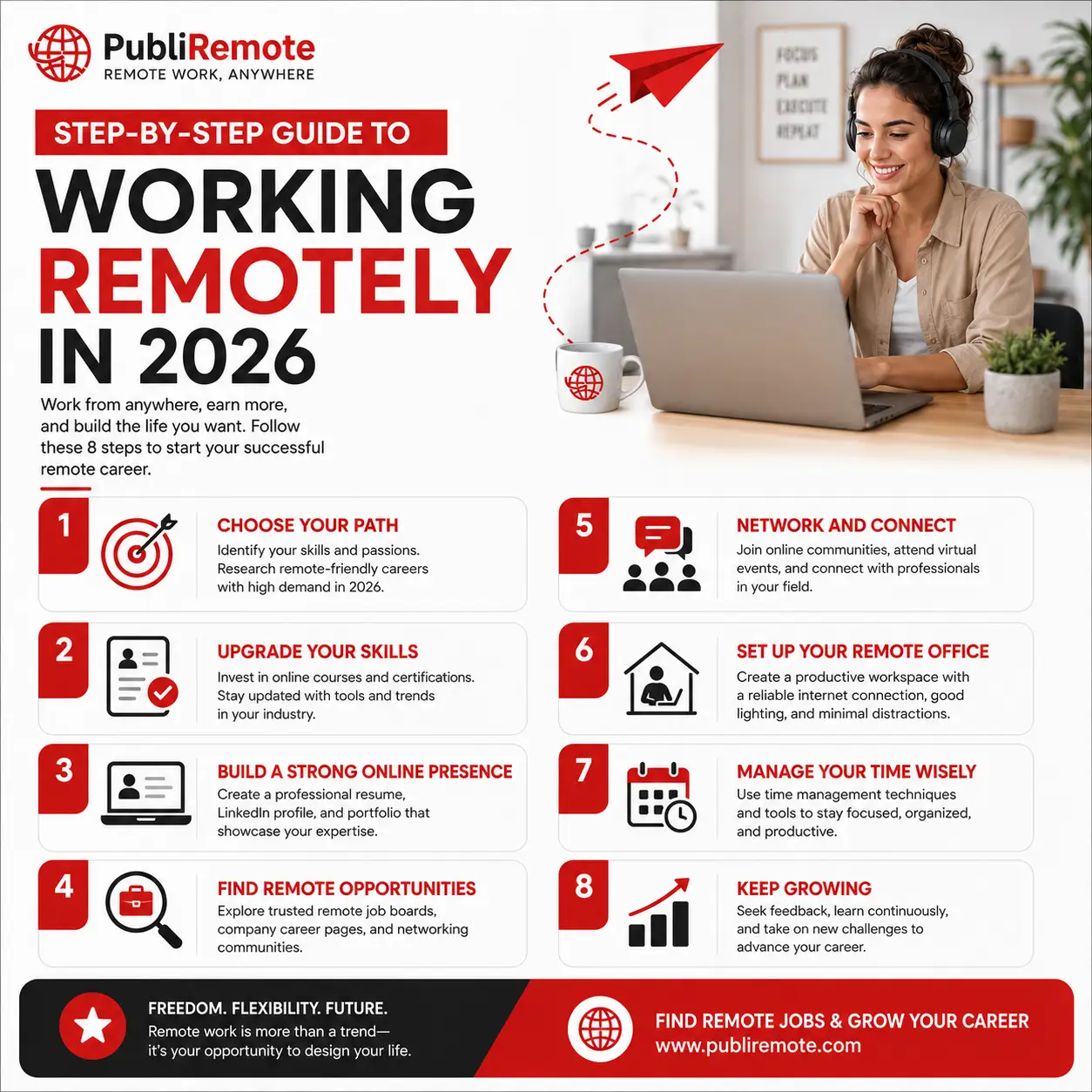
Why Remote Work Continues to Grow in 2026
The global workforce has changed dramatically over the last few years. Businesses now prioritize results, flexibility, and digital collaboration more than physical office attendance.
Remote work offers major advantages for both professionals and companies, including:
- Better work-life balance
- Increased productivity
- Access to global opportunities
- Reduced operational costs
- Flexible schedules
- Location independence
For many professionals, remote work has created opportunities that simply didn’t exist before.
4 Major Benefits of Working Remotely
1. Flexible Schedules & Better Time Management
One of the biggest benefits of remote work is eliminating daily commuting.
The time saved can be used to:
- Focus on important projects
- Improve personal wellbeing
- Learn new skills
- Spend more time with family
Remote professionals often experience higher productivity because they can organize their schedules more efficiently.
2. Freedom to Become a Digital Nomad
Remote work gives professionals the ability to work from anywhere with a stable internet connection.
Whether you prefer:
- Working from home
- Traveling internationally
- Living in different countries
- Exploring coworking spaces
Remote careers allow you to design your ideal lifestyle.
3. Lower Costs & Higher Efficiency
Working remotely reduces many traditional expenses, including:
- Transportation
- Office clothing
- Daily commuting costs
- Meals outside the home
For businesses, remote work also reduces infrastructure and office expenses while increasing access to international talent.
4. Better Work-Life Balance
A healthy balance between personal life and professional goals is one of the biggest reasons people choose remote careers.
Remote work allows professionals to:
- Manage family responsibilities
- Prioritize mental health
- Reduce stress
- Improve overall quality of life
Essential Tools for Remote Work in 2026
To succeed remotely, mastering digital tools is essential.
Slack — Team Communication
Slack helps remote teams stay connected through organized channels, direct messages, and collaborative discussions.
Best For:
- Instant communication
- Team collaboration
- Organized workflows
Trello — Project Management
Trello uses boards and task cards to help teams organize projects visually and track deadlines efficiently.
Best For:
- Task organization
- Team workflows
- Project tracking
Google Drive — Cloud Collaboration
Google Drive allows teams to collaborate on documents, presentations, and spreadsheets in real time.
Best For:
- File sharing
- Real-time editing
- Cloud storage
Zoom — Virtual Meetings
Zoom remains one of the most important tools for remote meetings, interviews, presentations, and team collaboration.
Best For:
- Video conferences
- Remote interviews
- Team meetings
Step-by-Step Guide to Working Remotely Successfully
Step 1: Create a Dedicated Workspace
Your workspace should be:
- Quiet
- Comfortable
- Organized
- Free from distractions
A dedicated work area improves focus and productivity significantly.
Step 2: Choose the Right Digital Tools
Your remote workflow depends on technology.
Learning tools like:
- Slack
- Trello
- Notion
- Zoom
- Google Workspace
can dramatically improve communication and efficiency.
Step 3: Build a Structured Schedule
Remote work requires discipline and time management.
Try:
- Setting fixed work hours
- Using time-blocking techniques
- Taking regular breaks
- Avoiding multitasking
Productivity comes from consistency, not longer working hours.
Step 4: Improve Asynchronous Communication
Remote teams often work across multiple time zones.
Learning to communicate clearly through:
- Written updates
- Organized documentation
- Detailed instructions
helps reduce unnecessary meetings and improves team efficiency.
Step 5: Keep Learning & Adapting
Remote work evolves quickly, especially with the growth of AI and digital collaboration tools.
Successful remote professionals continuously improve:
- Technical skills
- Communication skills
- Productivity systems
- Industry knowledge
Final Thoughts
Remote work in 2026 offers more opportunities than ever before. Whether you want to become a freelancer, join an international company, or live as a digital nomad, building the right habits and systems is essential for long-term success.
The future of work is flexible, global, and digital — and now is the perfect time to prepare for it.
For more remote work guides, career tips, and online job opportunities, visit PubliRemote Blog.
